If your front entrance feels too crowded, a new porch is often the most innovative way to reclaim your hallway.
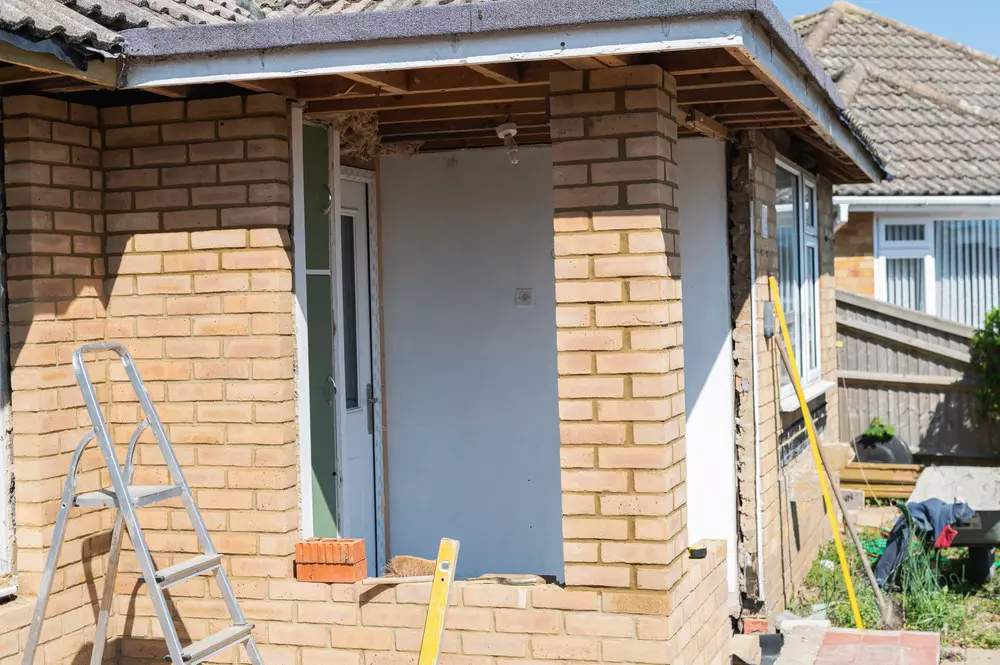
However, pinning down the exact cost of a porch in the UK can be tricky. Many UK homes open straight into a living room or hallway with no covered entrance at all, so prices range from adding a simple canopy for weather protection to building a full porch extension from scratch. Here are the realistic numbers for 2026 to help you plan.
The average cost to build a standard 3m² porch in the UK is around £4,500. Smaller canopy-style projects can cost less, while brick porches and custom designs often double or triple that range.
The price gap is wide because porch can mean a light structure added to the front of the house, or a proper build with a foundation and brickwork.
For a brick porch extension, a realistic budget is often around £7,500 to £12,500. Larger designs, oak frames, curved brickwork, or high-end glazing can push the final cost closer to £15,000 or more.
The biggest price difference is not always the size of the porch. It mainly depends on how much building work is needed. A porch that requires foundations, matching materials, roofing, and interior finishing will cost much more than a simple structure.
A canopy is a roof or cover fitted above the front door. Basic canopy kits can start around £200 to £500, while larger fitted glass or metal canopies often cost around £1,000 to £3,000.
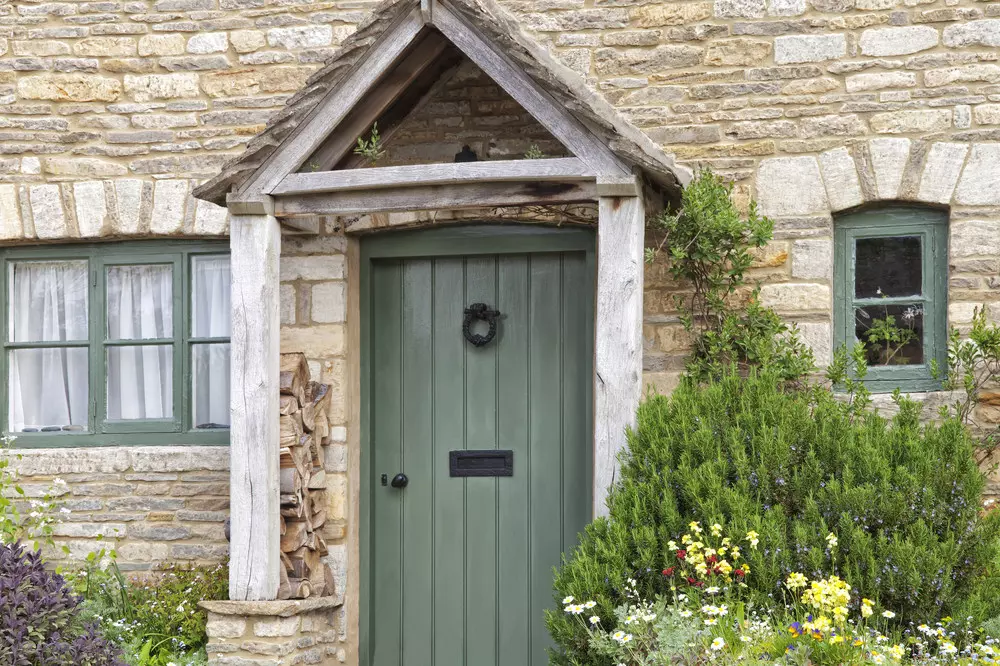
A full porch extension is an enclosed structure with its own base, walls or frame, roof, door, and glazing. Small enclosed porches often start around £4,000, while brick, oak, or larger designs can reach £15,000.
| Porch type | Typical cost | Best for |
| Aluminium or uPVC porch | £2,000–£5,000 | Pure utility and low-maintenance weather protection |
| Enclosed uPVC porch | £5,000–£7,500 | Creating a thermal airlock and adding security |
| Timber-framed porch | £6,000–£9,500 | Traditional look |
| Brick or oak porch | £10,000–£15,000 | Permanent value and architectural character |
Best for: Pure utility and low-maintenance weather protection.
If your main goal is simply to stop getting soaked while you unlock the front door, this is the functional end of the market. At the lower end (£2,000+), you are typically looking at a uPVC or aluminium lean-to. These bolt directly onto your existing wall and are quick to install because they don’t require heavy structural changes.
Moving up slightly to £3,500-£5,000, you find the basic open porch. This consists of a roof supported by simple columns or a frame.
Best for: Creating a thermal airlock and adding security.
By creating a sealed buffer zone, you prevent heat from escaping your hallway whenever you open the front door. The practical choice here is the enclosed uPVC porch (£5,000 to £7,500). You get a fully sealed room with double glazing and a multi-point locking door. It is durable and virtually maintenance-free.
If uPVC feels too plastic, a timber-framed porch offers a softer, more traditional look. However, the trade-off is a higher price tag and re-painting and sealing every few years.
Best for: Adding permanent value and architectural character.
A brick porch is built to last as long as the house itself. The cost is higher because you are paying for foundations, damp-proofing, and matching the brickwork to your facade. For a genuine statement piece, an oak extension is the top tier.
Skilled tradespeople in the UK generally work at a day rate of £200 to £300, though this can be higher in the South East and London. As labour often accounts for a substantial share of the total cost to build a porch, complex designs will likely increase the final bill.
Most people assume a porch costs more simply because it gets bigger. That is only half true. In the UK, the real price jump happens when you cross specific administrative and structural lines.
If you keep the floor area under three square metres, you usually stay within Permitted Development rights. These allow you to build without a complete planning application and save you roughly £1,000 to £1,500 in architectural drawings and council fees.
However, small doesn’t automatically mean cheap. While the average spend for this size sits between £4,000 and £5,000, your choice of material can drive the price up.
Once you go over 3m² at the front, you’ll usually need planning approval in England and Wales. Building Regulations are separate: a ground-level porch under 30m² is typically exempt if the existing external door stays in place and glazing and electrics comply. However, rules differ in Scotland and Northern Ireland.
If you opt for uPVC or aluminium, you should budget between £5,500 and £8,500. Even with these lighter materials, the cost is driven up by the need for a substantial concrete base and insulated flooring.
However, if you want a brick extension or an oak frame that matches your home, the investment jumps to £10,000-£15,000+. The extra cost covers structural roofing, cavity wall insulation, and the internal joinery.
| Porch size | Planning position | Typical cost |
| Small porch, up to 3m² | Usually permitted development | £4,000-£5,000 |
| Medium uPVC or aluminium porch, around 6m² | Usually needs planning approval at the front | £5,500-£8,500 |
| Medium brick or oak porch, around 6m² | Usually needs planning approval at the front | £10,000-£15,000 |
Homeowner tip: Compare the price per square metre with other projects, such as bedroom extensions, and decide which better suits your budget.
| Design type | Typical cost | What you’re paying for |
| Curved canopy kit | £200-£1,500 | A standard wall-mounted product |
| Custom curved porch | £6,000-£15,000 | Bespoke curved brickwork or oak framing |
| Glass canopy | £1,000-£3,000 | Glass, brackets, and a quick fitted install |
| Enclosed glass porch | £4,000-£10,000 | Structural glass and hidden steelwork |
The cost here comes down to one simple question: are you buying a kit, or asking a bricklayer to build a curve?
If you just want a curved roof over your door, buying a ready-made canopy is the cheapest option. You are paying for timber or metal that a builder can bolt to the wall in a few hours.
This is the option if you want the porch to look like it was always part of the house, perhaps to match an existing curved bay window.
As soon as you want curved brickwork or a rounded oak frame, though, the price jumps. The reason is labour. Curves stretch out the construction schedule, so a large portion of your budget is simply covering the extra days (or weeks) the tradespeople need to be on your driveway.
If you are drawn to the sleek, modern look, you need to decide if you just want weather protection or a complete structural addition.
Best for a quick, modern update without the mess. If you want to keep the rain off your guests and update the front of your house, this is the sensible route.
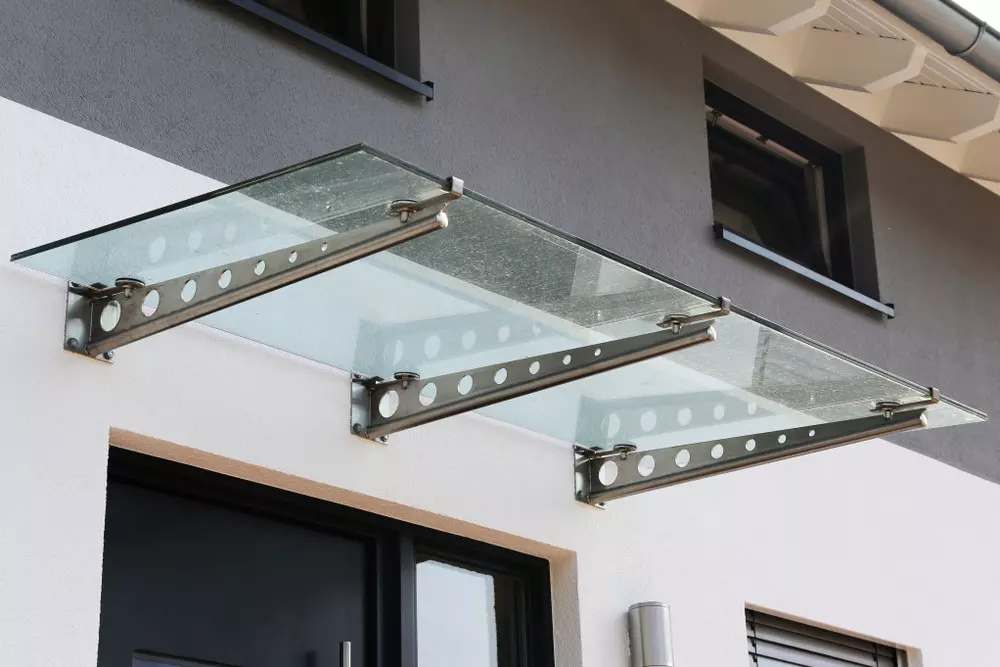
Because these systems rely on visible stainless steel brackets or tie rods, they are usually straightforward supply-and-fit jobs.
If you are set on a fully enclosed, frameless glass porch, be prepared for a much higher bill. To make a glass room safe, the installer often has to hide structural steel beams in the roof or the floor to support the weight.
Homeowner tip: While you’re paying a premium for the engineering to hold the glass up, you often get less insulation than a standard brick porch.
Cost to Replace or Renovate an Existing Porch
If you are replacing an old porch, removal can cost around £1,000 before the rebuild. The price can rise if there is roofing or a concrete base to break out.
Renovating may be cheaper if the structure is still sound. Re-glazing typically costs £300 to £1,200, re-roofing can range from £500 to £2,000, and replacing the door usually falls between £250 and £1,000, allowing you to refresh the porch without the cost of a full rebuild.
Your contractor should also tell you whether the existing base can stay. If it is sound and suits the new porch, it may not need replacing. If it has moved or gets damp, rebuilding from the ground up may be the better route.
You have likely budgeted for the bricks and the glass, but the final bill might also include a fee for:
If you build larger than 3 m², you usually trigger paperwork. If planning permission is required, the application fee depends on the type of application. In England, the cost for work to a single dwelling house is £528.
The front door is often the single most expensive item on the list. A basic uPVC door keeps costs low, while upgrading to a composite or solid oak door instantly adds hundreds (or thousands) to the bill. Similarly, decorative or leaded glass costs far more than standard clear double glazing.
Remember to budget for the electrician to install lights and power sockets. If you need to move a radiator or connect new guttering to your main drains, you will need a plumber, too.
If you are replacing an old porch, removing it costs money. You are paying for the labour to knock it down and the skip hire to take the rubble away. If the old concrete base needs breaking up, that adds heavy labour days before the new build.
With the average cost of a porch often landing between £4,000 and £12,000, it’s the kind of upgrade you plan for. Some decide to spread the cost over time with a home improvement financing plan.
In England and Wales, a porch is usually permitted development, meaning that no planning application is required. That’s if the external ground-floor area is no more than 3m², no part is higher than 3m, and no part is within 2m of any boundary with the highway. These allowances generally apply to houses, not flats or maisonettes, and can be removed by conditions or an Article 4 direction.
Note that building Regulations and Building Control are separate from planning. In England, porches are often exempt from Building Regulations approval if they’re at ground level and under 30 m², the existing external door remains, and the glazing and electrics comply. Scotland and Northern Ireland have different systems and thresholds, so check your local rules.
A porch should be seen as an upgrade to your home rather than a way to make a profit if you sell the house. A secure, attractive brick porch may return around 70% to 80% of its build cost when resold.
The absolute cheapest route is to install a DIY canopy kit. You can buy a pre-made timber or polycarbonate shelter for £150-£500 and bolt it to the wall yourself in an afternoon.
It is important not to confuse a 3m² porch with a 3m x 3m room. A 3m x 3m structure has a footprint of 9 square metres, which builders and councils classify as a front extension rather than a simple porch.
Because this size crosses the Permitted Development threshold, it almost always requires planning permission and deep foundations. You should budget for around £15,000 to £20,000 rather than the standard porch average.
Size is the obvious factor, but complexity is usually what pushes the price up. Brickwork, oak frames, curved shapes, pitched roofs, premium glazing, and internal finishing all add labour and materials. The more your porch becomes like a small extension, the higher the quote will be.
A basic quote usually covers the main build: the base, structure, roof, external door, glazing, weatherproofing, and labour. If the porch is being finished inside, the price may also include interior work, electrics, and rainwater drainage. Check this before comparing quotes, because one price may be for a finished porch while another may only cover the shell.
Many UK tradespeople charge around £200 to £300 per day, with higher rates common in London and the South East. A simple uPVC porch may be fitted quickly, while brick, oak, curved, or glass designs take longer and cost more in labour.
Doors and windows can add a few hundred pounds or several thousand, depending on the style. Standard uPVC keeps costs lower, while composite doors, timber frames, decorative glass, and large glazed panels raise prices.


(All content, including text, images, logos, and other materials, is the intellectual property of Renovate Dot UK Limited unless otherwise stated. You may not reproduce, distribute, or otherwise use the content for commercial purposes without prior written consent)
Every effort is made to keep the website up and running smoothly. However, Renovate Dot UK Limited takes no responsibility for, and will not be liable for, the website being temporarily unavailable due to technical issues beyond our control.
This disclaimer and all matters relating to your use of this website are governed by the laws of England and Wales, and any disputes shall be subject to the exclusive jurisdiction of the courts of England and Wales.


