Natural slate reroofing typically costs around £160 to £275 per square metre supply and fit, depending on roof size, complexity and access. The total cost, however, depends largely on the size of the roof and the complexity of the structure.
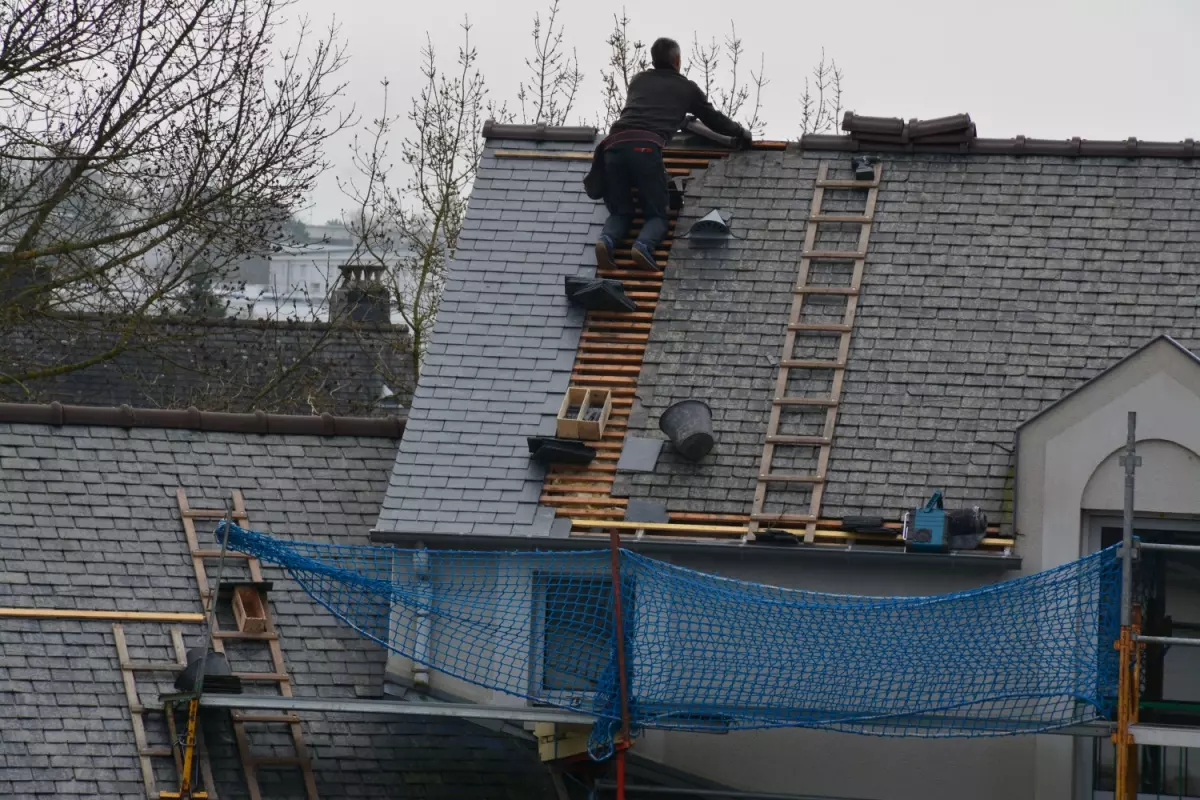
Slate roofing has been used on homes for hundreds of years. Many traditional British homes, particularly in older towns and rural areas, still use slate roofing today.
Slate is a natural stone that is split into thin tiles and installed individually on the roof. The result is a roof that can last for decades and sometimes over a century when installed correctly.
Note: Prices below are guide prices only, updated April 2026. They are national averages for illustration and are not quotations. You should confirm whether your quotes include VAT, scaffolding, waste removal, underlay or breather membrane, battens, flashing or leadwork, structural repairs, insulation upgrades, and any Building Control or planning-related costs.
Material costs have a major impact on the overall cost of a slate roof. However, labour costs, roof design, and site-specific factors all add to the total cost of the slate roof installation.
Slate roofs are typically priced based on square metres, and the cost directly correlates to the size of the roof.
For example, a small terraced property will generally cost far less to re-roof than a large detached home simply because there is less surface area to cover.
Roofs with multiple valleys, dormers, chimneys, or skylights take more time to install because each slate tile must be cut and fitted carefully around these features.
Additionally, a steep roof pitch can require more labour time and additional safety requirements.
In contrast, a simple roof with two large slopes is usually faster and easier for roofers to work on.
Access to the property can also affect the overall project costs.
If the roof is difficult to reach or if the home is located in a dense urban area where scaffolding is harder to install, labour time and equipment costs will likely be higher.
Homes in tight terraces or areas with limited working space may also require more planning and specialised equipment.
Slate itself can vary significantly in terms of cost.
Natural slate is typically more expensive than synthetic alternatives, and some varieties sourced from specific quarries can cost considerably more than standard options.
For example, Welsh slate and imported slates, such as Spanish slate, all have different price points.
Slate roofing installation requires experience and skill.
Slate is often installed one piece at a time, which takes longer to install than other roofing materials, such as concrete tiles, clay tiles, or sheet-metal roofing.
Because of the craftsmanship involved, labour costs tend to be higher for slate roofing projects.
For homeowners considering a slate roof, the first question that comes to mind is: how much does a slate roof cost? The total price can vary depending on several factors, like roof size, the type of slate used, and the complexity of the installation.
Additional expenses such as scaffolding, flashing repairs, or structural reinforcement may increase the overall cost.
Below are illustrative examples of natural slate reroofing by approximate roof area.
| Property Type | Typical Roof Area | Estimated Slate Roof Cost | Project Notes |
| Terraced house | 40–60 m² | £6,500–£16,500 | Terraced homes often have simpler roof layouts, which can help reduce labour time. However, limited access between properties may increase scaffolding costs. |
| Semi-detached house | 60–90 m² | £9,500–£24,500 | Semi-detached homes usually have slightly higher roofs and may include chimneys or valleys that require additional slate cutting and installation work. |
| Detached house | 90–140 m² | £14,500–£38,500 | Detached homes often have the largest roofs and more complex layouts. Multiple roof sections, dormers, or steep pitches may increase labour time and overall cost. |
Depending on what you need done to your roof, there can be significant cost differences.
A completely new slate roof is generally going to be the most costly slate roofing project.
This process often involves removing the old roofing material, preparing the roof for the new material, installing underlay, and then laying and fixing the new slate tiles.
The price will vary depending on the slate roofer cost, the quality of the material used, and the level of complexity.
Repairing a damaged slate roof is generally less expensive than replacing the entire roof. Examples include replacing individual broken tiles, fixing flashing, or securing loose slates.
Localised slate repairs often cost around £150 to £800, depending on the number of slates replaced, access, flashing work and whether scaffolding is needed. Larger repairs can cost more.
Restoration projects fall somewhere between minor repairs and full replacement.
This may involve re-fixing loose slates, cleaning the roof, repairing flashing, and improving drainage around the roof structure.
Again, costs can vary widely depending on the current condition of the roof and the scope of the work involved to bring the slate roof back into good shape.
Understanding how your choice of material affects both cost and longevity can help homeowners better estimate how much a new roof may cost when choosing slate.
Natural slate is a quarried stone and is widely known for its durability.
If properly installed and maintained, many natural slate roofs can last 75 to 100 years or more. Natural slate is also resistant to fire, mould, and weather damage.
Because of its longevity and natural appearance, natural slate is often one of the most expensive roofing materials.
Synthetic slate is a man-made product designed to replicate the appearance of natural slate. It is commonly made from composite materials such as rubber or plastic.
These tiles are usually lighter and much easier to install than natural slate, which may lower labour costs.
However, synthetic slate often has a shorter lifespan compared with natural slate, usually around 30 to 50 years.
For homeowners who want to balance appearance and budget, synthetic slate can sometimes be a practical alternative.
Labour is a major component of slate roofing costs, and labour rates may vary depending on location, experience level, and job complexity.
Many reroofing jobs are quoted as a full project price, but as a broad guide, roofers often charge around £250 to £360 per day per roofer, with specialist slate work toward the upper end. Slate roofers also commonly work in pairs.
Because slate roofing requires specialised skills, experienced slate roofers often charge more than general roofing contractors.
While this may increase the initial project cost, skilled installation can help improve the durability and performance of the roof over time.
A slate roofing project can involve several additional expenses beyond the cost of the slate tiles themselves.
Scaffolding is usually required for safety and access when completing roofing work.
Roofing scaffolding is often priced per week. As a broad guide, a two-storey terraced setup can be around £550 to £700 per week, a semi-detached house around £650 to £1,150 per week, and larger or more complex properties more again. Full reroofing projects can therefore easily push total scaffolding spend beyond £800 and into the low thousands.
Underlay is installed beneath the slate tiles to provide an additional weather barrier.
High-quality underlay can improve the roof’s durability and protect it from moisture.
Flashing is fitted where water can enter the roof structure, such as around chimneys, vents, skylights, and roof valleys.
Copper or lead flashing is commonly used with slate roofs.
Natural slate is heavier compared to many other roofing materials.
In some cases, the roof structure may need reinforcement to support the weight of natural slate tiles. This can add to the overall cost of the project.
Removing old roofing materials and disposing of construction waste may also add to the total price of the project.
The contractor you choose can influence both the quality and cost of your slate roof installation.
When comparing contractors, you may want to think about the following:
Working with an experienced slate roofing specialist can help reduce the risk of installation issues that might lead to costly repairs later.
Slate roofs usually have lower ongoing maintenance needs compared with many other types of roofing materials.
However, inspecting the roof yearly or after severe weather can help identify loose slates, damaged flashing, or minor issues before they develop into larger problems.
Slate roofs are often used on traditional and heritage properties, but they can also work well on many modern homes.
Because slate tiles are heavier than other roofing materials, a professional will need to assess the roof structure to determine if it can support additional weight.
Re-roofing can require approvals or extra checks, especially where large areas are being renewed, the new covering is heavier, the building is listed or in a conservation area, or roof or loft works could affect protected species such as bats. Requirements vary across England, Wales, Scotland and Northern Ireland, so check with your local authority or building control body before work starts.


(All content, including text, images, logos, and other materials, is the intellectual property of Renovate Dot UK Limited unless otherwise stated. You may not reproduce, distribute, or otherwise use the content for commercial purposes without prior written consent)
Every effort is made to keep the website up and running smoothly. However, Renovate Dot UK Limited takes no responsibility for, and will not be liable for, the website being temporarily unavailable due to technical issues beyond our control.
This disclaimer and all matters relating to your use of this website are governed by the laws of England and Wales, and any disputes shall be subject to the exclusive jurisdiction of the courts of England and Wales.


