A bay window roof might look like a small part of your home, but it often comes with surprisingly complex work. Unlike standard roof sections, bay roofs sit at angles, use different materials, and need precise waterproofing around edges and joints.
This is where costs start to vary.
For a straightforward bay roof of about 2 square metres, allow roughly £500 to £1,500 to replace felt, EPDM, or GRP. Lead and more involved jobs can exceed £2,000.
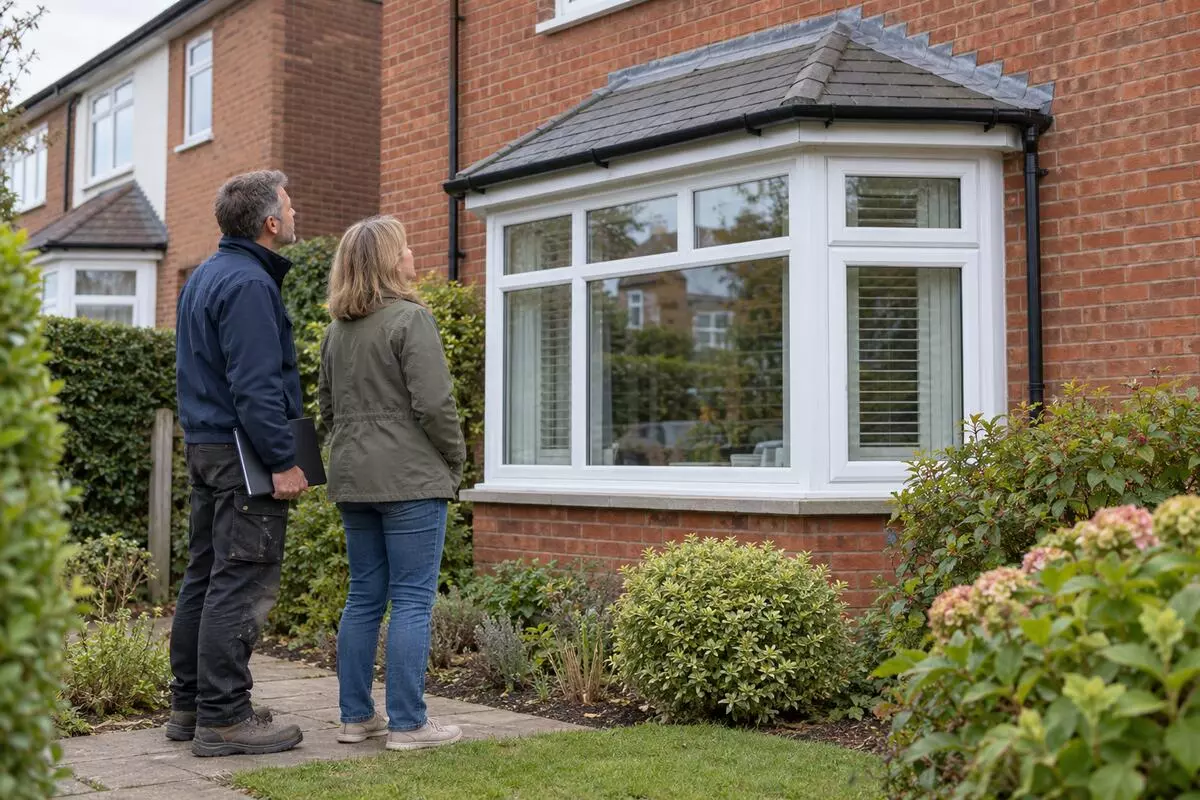
Smaller repairs can start as low as £150, depending on the issue. But here is the catch: the final price depends heavily on materials, access, and hidden damage underneath.
So how do you know what you will actually pay?
Let’s break it down clearly so you can compare repair vs replacement, understand your options, and avoid paying more than you should.
Not all bay window roofs are priced the same. Two homes on the same street can get very different quotes.
Here is what drives the cost.
A simple, small bay is quicker to work on. Larger or curved bays take more time and materials.
For example:
Easy access keeps costs down. Difficult access increases labour time.
For instance:
Tight spaces between properties can also slow things down.
Scaffolding is one of the biggest cost add-ons and catches a lot of homeowners off guard.
The roofer should assess whether scaffolding or another suitable working platform is needed. The height, roof shape, and work involved all affect safe access.
Allow around £500 to £1,200 for scaffolding where needed, with difficult access potentially costing more. It is a separate allowance, not part of the repair or replacement figures below.
Most bay window roofs are flat or low-pitched, but some use tiles or slate. The roof type affects both materials needed and the labour involved, which is why it’s one of the first things a contractor will look at when pricing a job.
Flat roofs tend to cost less in both materials and labour. Pitched roofs sit at the higher end.
That said, flat doesn’t automatically mean that it’s easier. Getting the waterproofing details right still takes skill, and cutting corners is where most problems start.
Material choice has a direct impact on both price and how long your roof lasts before it needs attention again.
Getting the material right from the start can save you a costly redo further down the line.
This is where costs can jump quickly. If contractors find:
Failed flashing may only need a local repair. Rotten decking or damaged supporting timber can make the work more involved, but the extent of the damage determines whether part or all of the roof needs replacing.
Leaks rarely stay small. Water can spread under the surface, causing:
This is why two similar-looking roofs can have very different quotes.
Labour costs vary quite a bit depending on where you are in the UK.
Rates also vary between contractors. Compare what each quote includes alongside relevant experience and examples of similar work, rather than treating a higher price as proof of a better job.
Repairs are often the first option homeowners consider. And in many cases, they make sense because they can cost considerably less than new roof costs.
Here are planning allowances for localised repairs with straightforward access. They cover the work described, labour, materials, and a provision for VAT. Scaffolding, wider structural repairs, and additional work are separate.
| Repair Type | Planning Allowance | What’s Included |
|---|---|---|
| Minor leak repair | £150–£400 | A local joint seal or small patch with sound surrounding materials |
| Lead flashing repair | £200–£600 | Local repairs at the roof-to-wall junction, not replacement of the main lead covering |
| Felt roof repair | £200–£800 | A local patch or reseal; no decking replacement |
| GRP fibreglass repair | £200–£800 | A local crack repair or patch; no decking replacement |
| EPDM rubber repair | £200–£800 | A local membrane patch or reseal; no decking replacement |
| Tile or slate replacement | £150–£400 | One to five readily available units with straightforward access |
| Limited decking repair | £300–£500 | Replacing one to three accessible boards during roofing work; new waterproofing is separate |
| Gutter and drainage fixes | £100–£350 | Clearing, resealing, or re-fixing a short section |
| Partial bay roof rebuild | Quote after inspection | Structural timber work and new waterproofing; scope depends on the damage |
| Scaffolding (if needed) | £500–£1,200+ | Separate access setup, hire, and removal |
For a bay roof of about 2 square metres with sound decking, allow around £500 to £800 for felt, £700 to £1,200 for EPDM, £900 to £1,500 for GRP, or £1,300 to £2,300 for lead. These are allowances for replacing the covering, not rebuilding the supporting roof.
Choosing the right material affects both cost and lifespan. The table covers flat and low-pitched bay roofs with membrane or lead coverings.
| Roofing Material | Local Repair Allowance | Replacement Allowance | Indicative Lifespan | Notes |
|---|---|---|---|---|
| Felt (bitumen) | £200–£800 | £500–£800 | 10–20 years | Often lower upfront cost |
| EPDM rubber | £200–£800 | £700–£1,200 | 25–35+ years | Product and detailing matter |
| GRP fibreglass | £200–£800 | £900–£1,500 | 25–30+ years | Seamless covering; installation matters |
| Lead | Specialist quote | £1,300–£2,300 | 50+ years | Main covering repairs differ from flashing repairs |
Replacement allowances include labour, materials, and an extra 20% budgeting margin because published guides do not consistently state VAT. Confirm the final VAT-inclusive total, stripping and disposal, and any extra decking, insulation, or scaffolding costs in your quote.
Lifespan figures are planning estimates, not warranties. They depend on the product, installation, exposure, and maintenance; some systems can last longer. Repair costs overlap because the size and cause of a defect matter as well as the material.
Pitched tile or slate bay roofs need a separate quote for the roof’s shape, tile matching, and detailing. The membrane and lead replacement allowances above should not be used to price them.
This is where a lot of homeowners get stuck, and it’s an easy call to put off.
| What the Roofer Finds | What to Consider |
|---|---|
| An isolated leak with sound surrounding materials | A targeted repair |
| Leaks returning after previous repairs | Investigate the cause before deciding |
| Localised damage to decking or timber | Ask whether the affected section can be repaired |
| Widespread deterioration affecting the covering and supporting materials | Compare replacement with further repairs |
| An older roof or damaged leadwork | Assess its condition rather than using age alone |
A small like-for-like repair may not need planning permission, but that does not automatically mean there are no other checks. Planning permission and building regulations are separate.
In England, building control requirements can apply when a substantial part of a roof is re-covered, even if it looks the same afterwards. Insulation, structural work, and changes to the covering may also need consideration.
Listed buildings and homes in conservation areas can have additional restrictions. Requirements vary across the UK, so check with your local authority before work starts.
Once you have an itemised quote, consider how the cost fits into your household budget and when payment will be due. Depending on your circumstances, you might use savings or consider finance from an appropriately authorised provider.
If you are considering roof financing, check the terms, fees, total amount repayable, and whether the repayments fit your budget before proceeding. Borrowing can increase the overall cost of the work.
The contractor you pick plays a role as much as the material you choose. A poor job on a bay window roof can leave you dealing with the same problems six months later.
Here is what to look for before you commit:
Repairs usually cost less upfront for isolated damage, but if you’re calling a roofer back every year or two, the bills add up fast. Replacement may work out cheaper over time if widespread deterioration is causing repeated problems. Get an assessment of the cause from your contractor before committing either way.
Most jobs are done within a day or two. The timeline depends on the size of the roof, the material being used, and how easy it is to access. Your contractor should give you a clear timeframe before work starts.
Yes, in many cases. If the structure underneath is still solid, a repair is often enough to sort the problem. Localised timber damage may also be repairable. Ask the roofer to explain the extent of any rot and whether the affected section can be repaired before agreeing to a full replacement.
Buildings insurance may cover damage caused by an insured event, such as a storm, but wear and tear and gradual deterioration are commonly excluded. Cover depends on the policy and the cause of the damage. Check the excess and any limits, and contact your insurer before assuming the replacement will be covered.
A solid quote should cover all of the following:
If any of these are missing, ask before you sign anything. Check the total includes VAT where applicable. Any additional work and its cost should be explained and agreed with you before it goes ahead.


(All content, including text, images, logos, and other materials, is the intellectual property of Renovate Dot UK Limited unless otherwise stated. You may not reproduce, distribute, or otherwise use the content for commercial purposes without prior written consent)
Every effort is made to keep the website up and running smoothly. However, Renovate Dot UK Limited takes no responsibility for, and will not be liable for, the website being temporarily unavailable due to technical issues beyond our control.
This disclaimer and all matters relating to your use of this website are governed by the laws of England and Wales, and any disputes shall be subject to the exclusive jurisdiction of the courts of England and Wales.


